
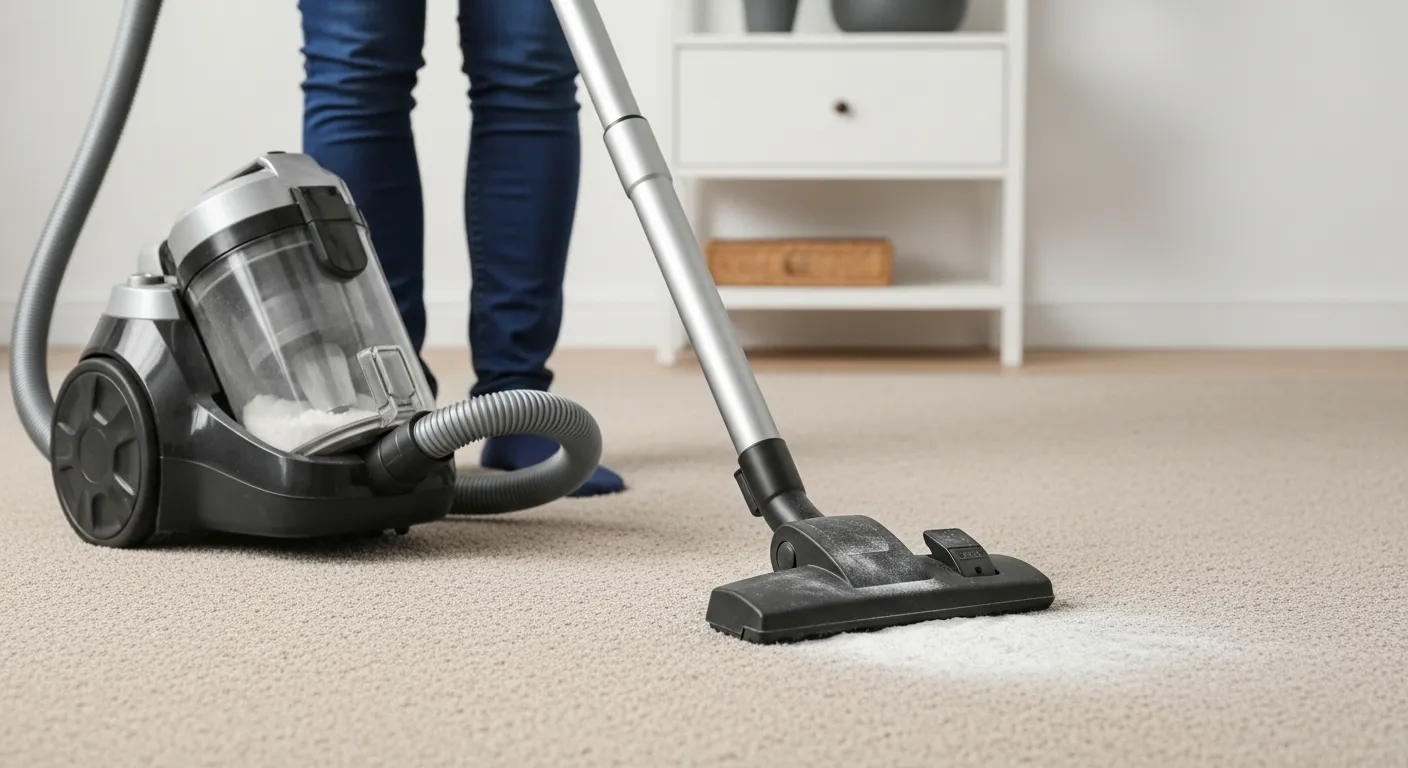
Mold in carpet is a common problem that many homeowners underestimate until odors, staining, or health symptoms appear. Carpet fibers, padding, and the materials beneath them can hold moisture longer than most people realize, creating ideal conditions for mold growth. In some cases, carpet mold removal is possible and effective, while in others, replacement is the safer and more cost-effective option.
The challenge is knowing which situation you are dealing with before spending time or money on the wrong fix. Health concerns, material damage, and the risk of recurrence all factor into the decision. This guide is designed to help you determine when a moldy carpet can be saved and when replacement is the smarter move.
Don’t Let Mold Chance Your Long Island Home! Contact Us Now for a Free Mold Inspection!
Why Mold Grows in Carpet So Easily
Carpet is particularly vulnerable to mold because it combines absorbent materials with limited airflow and slow drying times. Once moisture is introduced, it often spreads beyond the visible surface and remains trapped where it cannot easily evaporate.
- Moisture Retention: Carpet fibers and padding absorb and hold water from spills, leaks, or humidity.
- Padding and Subfloor Involvement: Moisture often reaches the padding and subfloor, allowing mold to grow out of sight.
- Time and Humidity Thresholds: Mold can begin developing within 24 to 48 hours when carpet stays damp.
- Surface Growth Misconception: Visible mold on carpet fibers is often only a small part of a larger hidden problem.
Types of Mold Commonly Found in Carpet
Several common mold types can develop in carpeted areas, especially when moisture problems go unresolved. Identification by appearance alone is unreliable, and the focus should remain on conditions rather than specific species.
- Surface-level Molds: Often appear as light discoloration or spotting on carpet fibers.
- Deeper Growth: Develops within carpet padding or beneath the carpet where moisture lingers.
- Color Variability: Mold color can range from white to green to dark tones and does not confirm severity.
- Allergenic vs Irritating Molds: Some molds primarily trigger allergies, while others cause general respiratory irritation without severe reactions.
Types of Mold Commonly Found in Carpet
Several common mold types can develop in carpeted areas, especially when moisture problems go unresolved. Identification by appearance alone is unreliable, and the focus should remain on conditions rather than specific species.
- Surface-level Molds: Often appear as light discoloration or spotting on carpet fibers.
- Deeper Growth: Develops within carpet padding or beneath the carpet where moisture lingers.
- Color Variability: Mold color can range from white to green to dark tones and does not confirm severity.
- Allergenic vs Irritating Molds: Some molds primarily trigger allergies, while others cause general respiratory irritation without severe reactions.
Health Risks Associated With Moldy Carpet
Moldy carpet can affect indoor air quality long before growth is obvious. As carpet fibers and padding release spores and microbial fragments into the air, occupants may experience symptoms that are easy to dismiss or misattribute. The risk level depends on the extent of growth, duration of exposure, and individual sensitivity. This is especially relevant in enclosed or poorly ventilated rooms.
- Allergic Reactions: Sneezing, nasal congestion, itchy eyes, and skin irritation are common mold allergy symptoms linked to carpet exposure.
- Asthma Triggers: Mold particles can worsen asthma symptoms or increase the frequency of flare-ups.
- Odors and Respiratory Irritation: Persistent musty smells often coincide with throat irritation, coughing, or sinus pressure.
- Vulnerable Populations: Children, older adults, and individuals with respiratory conditions tend to be more sensitive to mold-related air quality changes.
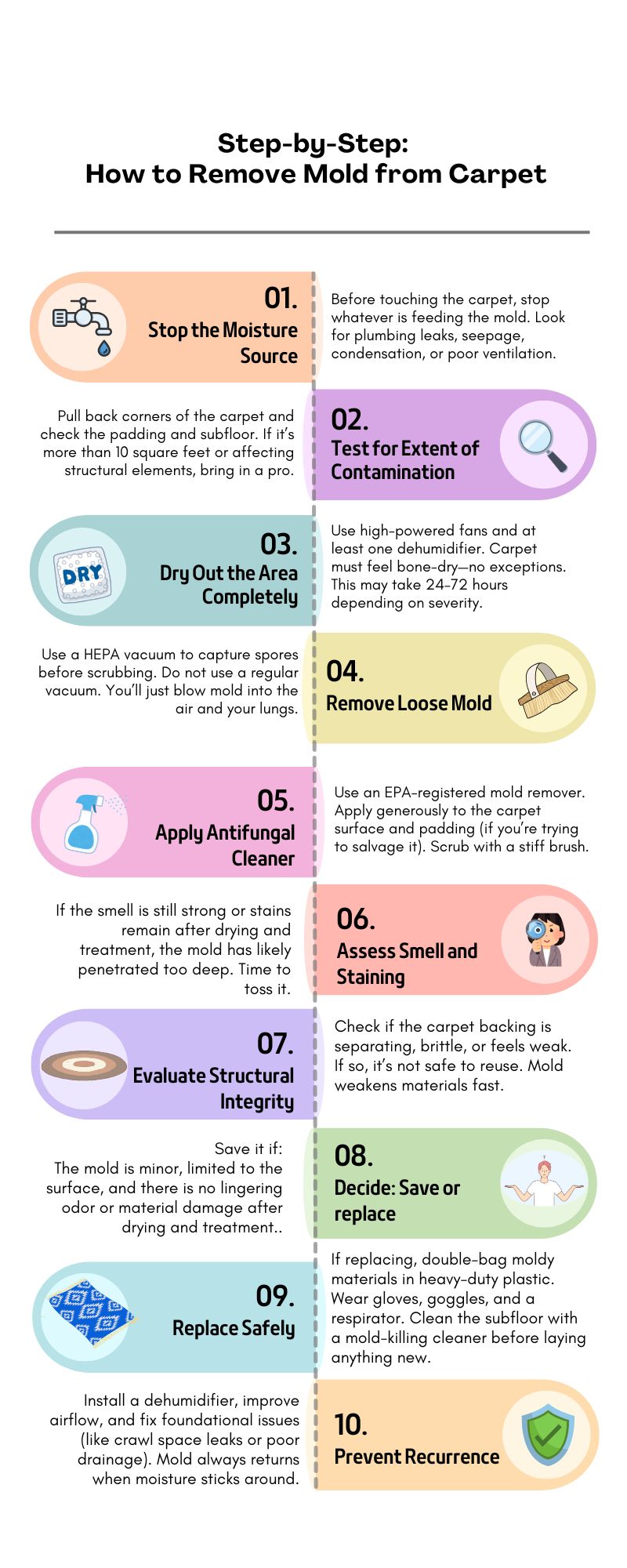
Step-by-Step: How to Remove Mold from Carpet and Decide Save vs Replace
The following mold removal process is designed to help you act fast, reduce spread, and avoid wasting money on cleaning when replacement is the only real fix. It focuses on moisture control first, because mold does not stay “cleaned” if the carpet stays damp or the source is still active.
Stop the Moisture Source: Find the leak or humidity source now
Before touching the carpet, stop whatever is feeding the mold. Look for plumbing leaks, seepage, condensation, or poor ventilation. Dehumidifiers help, but if water is still coming in from the outside or a burst pipe, you’re just chasing your tail.
Test for Extent of Contamination: Don’t guess, inspect
Pull back corners of the carpet and check the padding and subfloor. Smell test: strong musty odor = likely deeper spread. If it’s more than 10 square feet or affecting structural elements, bring in a pro.
Dry Out the Area Completely: Fans and dehumidifiers running 24/7
Use high-powered fans and at least one dehumidifier. Carpet must feel bone-dry—no exceptions. This may take 24–72 hours depending on severity.
Remove Loose Mold: HEPA vacuum first
Use a HEPA vacuum to capture spores before scrubbing. Do not use a regular vacuum. You’ll just blow mold into the air and your lungs.
Apply Antifungal Cleaner: Go beyond vinegar and baking soda
Use an EPA-registered mold remover. Apply generously to the carpet surface and padding (if you’re trying to salvage it). Scrub with a stiff brush. Don’t over-soak or you’ll create new moisture problems.
Assess Smell and Staining: Is it actually clean?
If the smell is still strong or stains remain after drying and treatment, the mold has likely penetrated too deep. Time to toss it.
Evaluate Structural Integrity: Feel for softness or crumbling
Check if the carpet backing is separating, brittle, or feels weak. If so, it’s not safe to reuse. Mold weakens materials fast.
Decide: Save or replace
Save it if:
- mold is minor and surface-level
- padding and subfloor are clean and dry
- odor is gone after treatment
- no visible damage remains
Replace it if:
- mold has reached padding or subfloor
- odor and staining persist
- you have respiratory or immune conditions
- it was caused by sewage, flooding, or blackwater
Replace Safely: Bag and remove like hazardous waste
If replacing, double-bag moldy materials in heavy-duty plastic. Wear gloves, goggles, and a respirator. Clean the subfloor with a mold-killing cleaner before laying anything new.
Prevent Recurrence: Moisture control or you’ll be back here soon
Install a dehumidifier, improve airflow, and fix foundational issues (like crawl space leaks or poor drainage). Mold always returns when moisture sticks around.
When Carpet Should Be Replaced
Replacement becomes the safer option when mold has moved beyond the carpet fibers or when moisture issues cannot be fully corrected. Continuing to clean carpet under these conditions often leads to recurring mold and higher long-term costs.
- Water Saturation Or Flooding: Prolonged exposure allows mold to establish deep within carpet padding and backing materials, where surface cleaning cannot reach.
- Mold Penetrating Padding: Once the padding is affected, removal is typically necessary because moisture and spores remain trapped below the carpet surface.
- Recurring Mold After Cleaning: Reappearance after treatment usually signals unresolved moisture sources or hidden contamination beneath the flooring.
- Structural Moisture Issues: Ongoing leaks, slab moisture intrusion, or consistently high indoor humidity make carpet salvage unreliable and short-lived.
DIY Carpet Mold Removal: What Works and What Doesn’t
DIY mold removal on carpet can work in limited situations, but expectations need to be realistic. Household cleaners may reduce surface mold and odor, but they do not address moisture trapped in carpet padding or underlying materials. Effective DIY efforts depend more on moisture removal and drying speed than on the cleaning solution used. Without proper drying and airflow, mold is likely to return.
Ventilation and dehumidification are critical after any DIY cleaning attempt. Masking odors with fragrances or cleaners can create a false sense of success while mold remains active below the surface. Bleach is often misused on carpet because it does not penetrate porous fibers well and can leave moisture behind, which may worsen mold conditions rather than resolve them.
Professional Mold Removal for Carpet
Professional carpet mold removal focuses on identifying the full extent of moisture and contamination, not just what is visible. Trained remediation teams use specialized tools and controlled processes to reduce the risk of recurrence and cross-contamination.
- Locate hidden moisture using meters and thermal imaging tools
- Isolate affected areas with containment to prevent spore spread
- Extract mold and debris using HEPA-filtered equipment
- Assess carpet padding and subfloor conditions before recommending cleaning or removal
- Provide documentation and post-remediation clearance when needed
Cost Comparison: Cleaning vs Replacement
Cost is often a deciding factor, but focusing only on the initial price can be misleading. Carpet cleaning may appear less expensive upfront, while replacement can prevent repeated expenses if moisture issues persist. The true cost depends on how quickly the problem is resolved and whether underlying conditions are corrected.
- Cleaning Costs: Lower short-term expense but higher risk of repeat treatment
- Replacement Costs: Higher upfront investment with more predictable long-term results
- Recurrence Risk: Repeated cleaning can exceed replacement cost over time
- Insurance Factors: Coverage may apply in cases involving leaks or water damage
How to Prevent Mold From Returning
Preventing carpet mold starts with controlling moisture, not cleaning more often. Once the source of moisture is addressed, carpet becomes far less likely to support mold growth. Long-term prevention focuses on drying, airflow, and material decisions.
- Correct moisture sources such as leaks, spills, or slab moisture
- Maintain indoor humidity at controlled levels year-round
- Improve ventilation in basements, bedrooms, and enclosed rooms
- Consider moisture-resistant flooring in high-risk areas
When to Call a Mold Professional
Some carpet mold situations require expert evaluation to avoid ongoing health or structural issues. A professional inspection can clarify whether cleaning is sufficient or replacement is necessary. Early assessment often prevents larger, more expensive problems later.
- Uncertainty about how far mold or moisture has spread
- Health symptoms potentially linked to carpet exposure
- Mold returns after cleaning or drying attempts
- Insurance claims or real estate transactions are involved
How to Remove Mold from Carpet: Final Thoughts
We hope this blog has helped you understand how to remove mold from carpet. Remember, mold in carpet is not a one-size-fits-all problem, and the right solution depends on how far moisture has traveled and how long conditions were present. In some cases, quick action and thorough drying can make carpet mold removal effective. In others, replacement is the only way to eliminate hidden contamination and prevent recurring issues. Understanding the role of padding, subfloor moisture, and odor persistence helps avoid wasted effort and ongoing risk.
If you’re unsure whether your carpet can be safely saved, a professional assessment removes the guesswork. Schedule a mold inspection today to get clear answers, protect indoor air quality, and choose the most cost-effective solution before mold becomes a bigger problem.