

What Are Signs of Mold in a House?
So, what are the signs of mold in a house? Most online advice oversimplifies mold into colors. Black equals danger. White equals mildew. Green equals toxic. In real homes, color is one of the least reliable indicators. Mold should be understood by how it behaves, not how it photographs.
This section resets expectations so you can recognize mold in real living spaces, not stock images.
Mold commonly shows the following visual behaviors:
Mold often looks raised, velvety, dusty, or slightly slimy depending on moisture levels. It rarely looks flat and painted on. Even when subtle, the surface usually feels different than the surrounding area.
Mold does not stop cleanly. The edges tend to fade, spread, or look uneven as growth follows moisture paths in materials like drywall, wood, or grout.
Mold grows outward from a moisture source. You may see clustering around corners, seams, fasteners, or insulation lines rather than random placement.
Mold often appears where materials meet. Drywall to trim. Tile to grout. Vent metal to ceiling paint. These junctions trap moisture and dust, which mold feeds on.
Color alone means very little because the same species can appear differently depending on lighting, material, age, and moisture. Black mold can be harmless surface growth. Dangerous mold can appear light gray or barely visible. Focusing on color leads to false alarms and missed problems.
Not Sure if What You’re Seeing in Your Long Island Home is Mold? Reach Out to Us for a Free Mold Inspection!
Health Symptoms of Mold Exposure
Health-related concerns often trigger mold inspections, but symptoms alone do not identify a cause. The useful information comes from patterns, not symptom lists. Common mold symptoms include nasal irritation, coughing, headaches, fatigue, or eye discomfort. The key indicators are consistency and location.
- Symptoms worsen at home
- Symptoms improve when away
- Symptoms correlate with specific rooms or times
These mold related symptoms suggest an environmental factor worth investigating. They do not confirm mold or replace medical evaluation.

Mold vs. Not Mold (A Simple Decision Matrix)
This section exists to stop false positives before they spiral. Many things found on walls, ceilings, and vents look alarming but have nothing to do with mold growth. The goal here is to help you compare what you are seeing using moisture, texture, and surface behavior rather than assumptions.
Below is a practical comparison of mold and its most common look-alikes.
| Substance | Typical Appearance | Texture & Edges | Moisture Relationship | Surface Reaction When Cleaned |
|---|---|---|---|---|
| Mold | Irregular spots or patches that may cluster or spread outward | Uneven, fuzzy, dusty, or slightly raised edges | Almost always tied to current or past moisture | May lighten temporarily on the surface but often returns if moisture remains |
| Dirt | Smudges or buildup in high-touch or high-traffic areas | Flat, smooth, wipes evenly | Not dependent on moisture | Removes cleanly with normal cleaning |
| Soot | Black or dark gray staining near candles, fireplaces, or vents | Powdery, uniform edges | Not moisture-driven | Smears or lifts evenly during cleaning |
| Mildew | Thin surface growth, often in bathrooms | Flat or slightly powdery, limited spread | Needs humidity but less invasive | Usually clears easily if moisture is controlled |
| Water stains | Yellow, brown, or rust-colored rings or patches | Flat with defined borders | Evidence of past moisture, not active growth | Does not spread or change once dry |
A common point of confusion is surface lightening during cleaning. Some substances fade quickly. Mold may also appear to fade, but that reaction only affects surface discoloration. If moisture remains in the material, underlying growth can persist or return.
What this changes for you is accuracy. By comparing texture, moisture history, and how the surface behaves, you can rule out harmless staining and focus attention only where it belongs.
Where to Look First. A Priority Inspection Path
Randomly scanning a house leads to missed problems and unnecessary stress. Mold follows moisture, and moisture follows predictable paths. This section gives you a priority-based inspection route so you can check the most likely areas first without opening walls or dismantling your home.
High Priority Areas
These locations combine moisture, poor airflow, and materials that trap condensation.
- Bathrooms
- Basements
- Windows
- HVAC vents, fans, and returns
Medium Priority Areas
These spaces experience intermittent moisture but usually dry out faster.
- Kitchens
- Laundry rooms
- Closets
Lower Priority Areas
Dry, well-ventilated spaces are less likely to develop mold unless there is an undiscovered leak.
- Living rooms and bedrooms
- Interior hallways
Signs of Mold Near Fans, Vents, and HVAC
Mold near fans and vents is common and often misunderstood. Most cases are not caused by mechanical failure or contaminated ductwork. They are caused by how airflow interacts with moisture and dust. Air movement changes temperature at surfaces. When warm, humid air passes over cooler metal or painted surfaces, condensation forms. Dust settles in these areas, giving moisture something to cling to. That combination explains most mold growth seen near fans and vents.
Around Ceiling Fans
Ceiling fans circulate air but do not remove humidity. In humid rooms, they push warm air toward cooler ceilings. Dust accumulates above the blade path and along the ceiling surface. When condensation forms, mold can develop on paint or drywall in irregular patterns.
Around Exhaust Fans
Bathrooms create short bursts of heavy moisture. If the exhaust fan is undersized, clogged, or does not run long enough when it needs to, humidity lingers on the ceiling around the fan housing. Mold often appears around the fan cover, mounting screws, or adjacent drywall.
Around Return Vents
Supply and return vents create temperature differences. Metal vent surfaces are often cooler than the surrounding room air. Dust collects around vent edges. When humidity rises, condensation forms on that dust layer. This is why staining often appears in a ring pattern around vents.
When Surface Mold Does Not Mean Duct Contamination
Visible mold near vents does not automatically mean mold inside ductwork. True duct contamination usually involves widespread internal growth and ongoing moisture inside the system. Surface growth around vents is far more common and usually tied to humidity and airflow, not duct conditions.
What You Need to Know About Hidden Mold
Hidden mold concerns arise when conditions feel wrong but nothing is visible. Odors persist. Humidity stays high. Surfaces behave differently over time. These signs point to moisture movement within the structure, not guesswork.
- Musty Odors: Musty smells often intensify after rain, during humid weather, or when HVAC systems cycle. Odors that appear and disappear usually originate from enclosed spaces such as wall cavities, insulation, subfloors, or behind cabinets. Opening windows or running HVAC continuously may reduce the smell temporarily without addressing the source.
- Persistent Humidity: Homes with hidden moisture problems often feel damp even at comfortable temperatures. Dehumidifiers fill quickly. Condensation appears repeatedly on windows, vents, or cold surfaces. Moisture, in the form of humidity travels through buildings via air pressure differences, vapor diffusion, and material absorption. Liquid leaks are not required for mold growth to occur.
- Soft Drywall and Subtle Warping: Extended moisture exposure weakens materials. Drywall may feel soft near baseboards or plumbing walls. Floors may cup or lift slightly. Trim may pull away from walls. These changes indicate long-term moisture exposure rather than isolated surface issues.
- Recurrent Condensation: Repeated condensation in the same locations often points to insulation gaps, thermal bridging, or air leakage. These conditions allow moisture to collect inside walls and ceilings even when no active leak is present.
- When Not to Open Walls: Opening walls without confirmation often creates unnecessary damage and complicates cleanup, insurance, or resale documentation. Non-invasive inspection methods such as moisture mapping and thermal imaging are often more appropriate when the source is unclear.
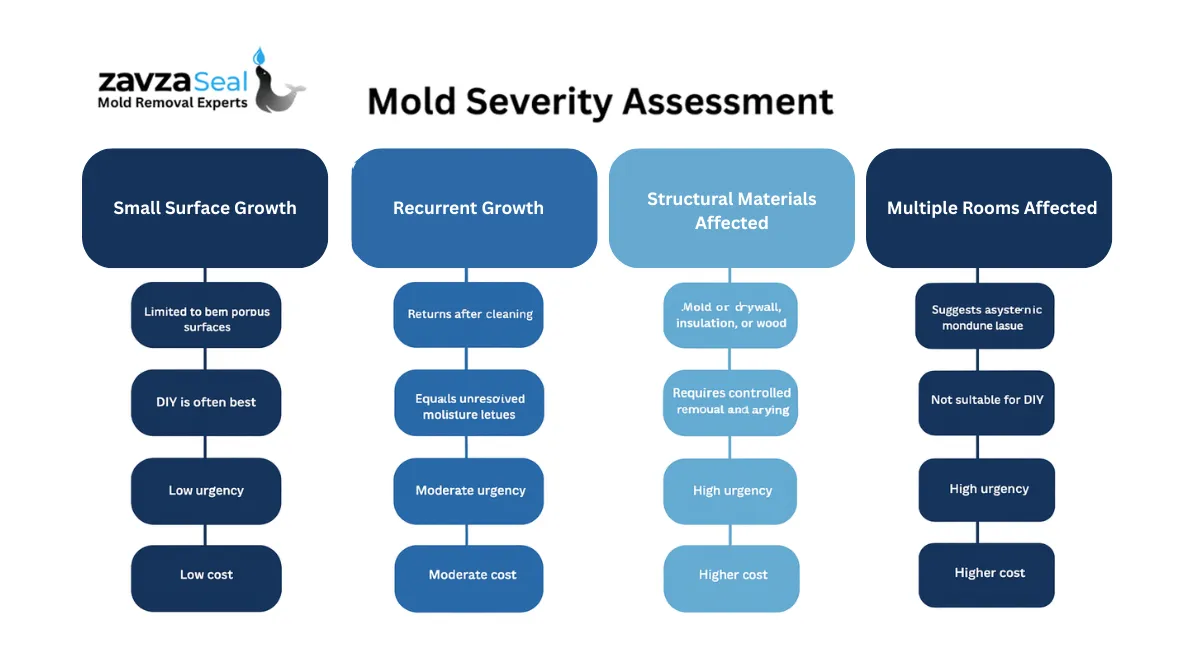
Understanding Mold Severity Levels in a Home
This chart shows how mold problems escalate based on spread, material involvement, and recurrence, not color or fear-factor. Small surface growth limited to non-porous materials is usually lower urgency and sometimes manageable with proper cleaning. When mold returns after cleaning, it signals unresolved moisture and moves into a moderate-risk category. Once structural materials like drywall, insulation, or wood are affected, controlled removal and drying are required, and urgency increases. Mold impacting multiple rooms points to a systemic moisture issue, rules out DIY approaches, and typically involves higher cost due to containment, material removal, and verification. The takeaway is simple: severity rises with moisture persistence and material penetration, not how dramatic the mold looks.
How to Choose the Right Mold Remediation Contractor
Choosing the wrong contractor often makes a mold problem worse, not better. Mold remediation is not surface cleaning or chemical spraying. A qualified contractor starts by identifying the moisture source, defines what materials must be removed versus cleaned, and uses proper containment to prevent spread. Clear documentation and post-remediation verification are standard, not optional.
If a company skips moisture investigation, relies on fogging, avoids clearance testing, or uses fear-based sales tactics, those are red flags. Knowing what questions to ask and what standards to expect protects you from repeat growth and failed inspections.
In Long Island, Brooklyn, Queens, and The Bronx, Homeowners Trust Mold Removal Experts (the Zavza Seal family) for Free Mold Inspections and Proven Solutions that Stop Mold for Good!
For a step-by-step breakdown, read our in-depth guide: How to Choose the Right Mold Remediation Company.
What Are the Signs of Mold in a House? Final Thoughts
Mold in homes is identified by behavior, moisture, and patterns, not color or fear-based labels. Visual changes, recurring odors, humidity issues, and location-specific symptoms are stronger indicators than surface appearance alone. Proper remediation starts with moisture control, not cleaning products or shortcuts.
We hope this answered your question, “What are the signs of mold in a house?” Remember, mold problems that are caught early are easier, cheaper, and far less disruptive to resolve. If something in your home feels off, trust that instinct, but verify it correctly.
Not sure if what you are seeing or smelling is mold in your Long Island home? Contact us today for a free professional mold inspection, clear answers, and guidance that fixes the problem instead of hiding it.