
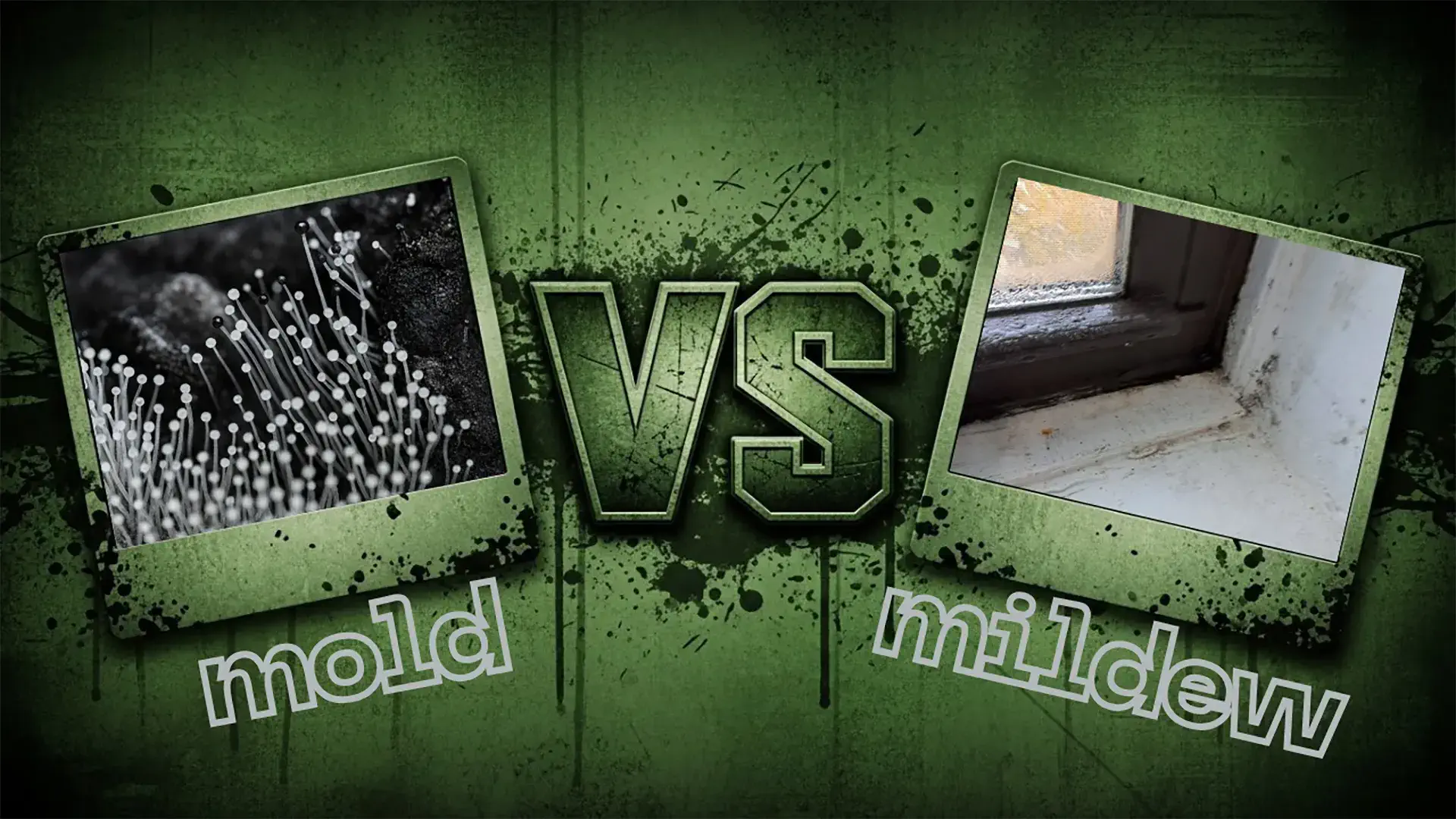
Mold and mildew are often lumped together, but they aren’t the same, and knowing the difference can help you understand how serious a problem really is. Many homeowners use the terms interchangeably, which makes it harder to tell when an issue is minor versus when it deserves closer attention.
While mold and mildew are both types of fungi, they behave differently once they appear inside a home. They grow in different ways, spread at different rates, and signal different levels of underlying moisture problems.
This guide breaks down the key differences between mold vs mildew, shows how to tell mold and mildew apart, and explains why that distinction matters before a problem escalates.
Mold vs Mildew: Why the Difference Matters
While both mold and mildew are types of fungi, the difference between them affects how fast they spread, where they grow, and how difficult they are to remove. Understanding this distinction is critical for homeowners because it influences how problems are identified, contained, and solved before they escalate.
Why this mold vs mildew comparison matters:
- Mildew is usually surface-level and easier to treat
- Mold can grow deep into walls, floors, or insulation
- Mistaking one for the other can lead to incomplete cleanup and recurring issues
What Is Mildew?
Mildew is a type of surface-level fungus that usually appears in damp, warm areas with poor airflow. It tends to grow flat and spread in lighter-colored patches, making it more noticeable and typically easier to remove than deeper mold growth. While often seen as a cosmetic issue, mildew can be an early warning sign of ongoing moisture problems.
Common places you’ll find mildew growth:
- Bathroom walls and shower grout
- Fabric items like curtains or towels
- Window sills and corners
- Poorly ventilated laundry or storage areas
What Is Mold?
Mold is a broader category of fungi that can grow on and inside building materials when moisture is present long enough. Unlike mildew, which stays on the surface, mold penetrates into materials, making it harder to detect and easier to spread beyond what you can see.
Mold appears in a wide range of colors and textures, and it doesn’t always show up where moisture first enters. Because it can grow behind walls, under floors, or above ceilings, visible mold is often only part of a larger issue.
Mold commonly affects:
- Drywall and plaster
- Wood framing and subfloors
- Insulation
- Carpets and padding
- Ceiling tiles and backing materials
Mold vs Mildew: Key Differences at a Glance
Although mold and mildew are related, their behavior and impact are noticeably different once you know what to look for. This quick comparison helps reinforce the practical differences without getting technical.
Key differences between mold and mildew:
- Growth Pattern: Mildew stays on the surface; mold grows into materials
- Appearance: Mildew is usually light-colored and flat; mold can be dark, fuzzy, or patchy
- Smell: Mildew has a mild musty odor; mold odors are often stronger and persistent
- Spread Speed: Mildew develops early; mold spreads more aggressively over time
- Typical Severity: Mildew signals a surface moisture issue; mold often indicates a deeper moisture problem
These differences explain why correctly identifying mold vs mildew matters before deciding what to do next.
How to Tell Mold and Mildew Apart in Your Home
In many cases, you can tell mold and mildew apart by paying close attention to appearance, texture, smell, and where the growth is located. While professional inspection is always the safest option, there are key clues that can help you make a preliminary distinction without touching or testing.
Here’s how to identify mold vs mildew using your senses:
Sight
- Mildew is usually white, yellow, or light gray and grows in flat patches or powdery clusters.
- Mold often appears black, green, blue, or brown with fuzzy, slimy, or irregular textures.
Smell
- Mildew has a mild, musty odor, similar to damp towels.
- Mold gives off a stronger, earthy, or pungent smell that’s harder to ignore.
Location
- Mildew tends to grow on shower tiles, windowsills, and damp fabrics.
- Mold can show up in basements, behind drywall, under sinks, or inside HVAC systems, places where moisture lingers unseen.
Is Mildew Dangerous Compared to Mold?
Mildew is generally less aggressive than mold, but that doesn’t mean it should be ignored. Even surface mildew can trigger irritation, especially in people with allergies or asthma. In contrast, mold poses a greater long-term risk because it can grow into walls and spread through the air. If left unchecked, what starts as mildew can escalate into a more serious mold issue, and 99% of the time, one that’s harder to clean and more expensive to fix.
When Mildew Becomes Mold
Mildew doesn’t always stay mildew. When moisture persists, surface growth can develop into more established mold. What starts as a light patch on tile or fabric can penetrate into drywall, wood, or insulation over time.
How mildew turns into mold:
- Moisture sits too long without ventilation
- Surface cleaning doesn’t address deeper dampness
- Humid areas create ideal conditions for transformation
That’s why early attention is key: it’s much easier to treat mildew than wait until it becomes a mold infestation.
Mold vs Mildew: Final Thoughts
Understanding mold vs mildew comes down to recognizing how moisture, time, and material exposure determine how serious a fungal problem becomes. Mildew often shows up first, and while it’s easier to wipe away, it’s also a warning sign.
Mold, on the other hand, digs deeper. It spreads faster, lasts longer, and demands a more aggressive cleanup. The earlier you spot the difference, the easier it is to keep your home, and your health protected.
Noticing Mold or Mildew in Your Long Island, Brooklyn, or Queens, NY, Home or Business? Don’t Wait! Get a Free Mold Inspection by Reaching Out to Us Now!
Frequently Asked Question: Mold vs Mildew
How can I quickly tell the difference between mold and mildew?
Look at the texture and color. Mildew is usually flat, white or yellowish, and grows in patches. Mold is often darker, black, green, or brown, and appears fuzzy, slimy, or textured. Smell can also help: mold is more pungent and earthy than mildew.
Is mildew less dangerous than mold?
Generally, yes. Mildew is often surface-level and easier to clean, while mold can penetrate materials and release more spores, increasing the risk of health effects and structural damage if left untreated.
Can mildew turn into mold if left alone?
Yes. Mildew can act as a precursor to mold, especially in areas with ongoing moisture and poor ventilation. What starts as a surface stain can evolve into a deeper, more damaging fungal infestation.
4. What are the first signs of mildew in a home?
Common early signs include:
- Light patches on walls or fabric
- A damp, musty smell
- Growth on bathroom grout, shower walls, or windowsills
- These are often warning signs of excess humidity.
What does mold usually smell like compared to mildew?
Mold has a stronger, earthier, and more persistent odor, while mildew tends to smell lighter and mustier, like damp towels. If the smell lingers or intensifies, it may be mold.
Is it safe to clean mildew myself?
In many cases, yes. Mild mildew on non-porous surfaces (like tile) can be cleaned using safe household products. However, avoid scraping or brushing it dry, as this can release spores. If in doubt, or if it keeps coming back, consult a professional.
Can mold and mildew both appear in the same area?
Absolutely. Areas like bathrooms, basements, or kitchens can support both mildew and mold depending on surface type, moisture level, and how long the area has been damp. Mildew may show up first, mold follows if the problem isn’t resolved.
Does bleach kill both mold and mildew?
Bleach can remove surface-level mildew on hard materials. However, it doesn’t always kill mold at its roots, especially on porous materials like wood or drywall. For mold cleanup, a more thorough remediation process is often needed.
Is mildew a sign of a bigger problem?
Yes. It’s often an early warning sign of poor ventilation, leaks, or excess humidity. While mildew itself may be minor, the conditions that allow it to grow can lead to more serious mold infestations if not addressed.
When should I call a professional for mold or mildew?
If you:
- See mold on drywall, wood, or insulation
- Smell a persistent musty odor but can’t find the source
- Experience health symptoms around certain areas
- Have recurring mildew despite cleaning …it’s time to consult a certified mold remediation expert.