
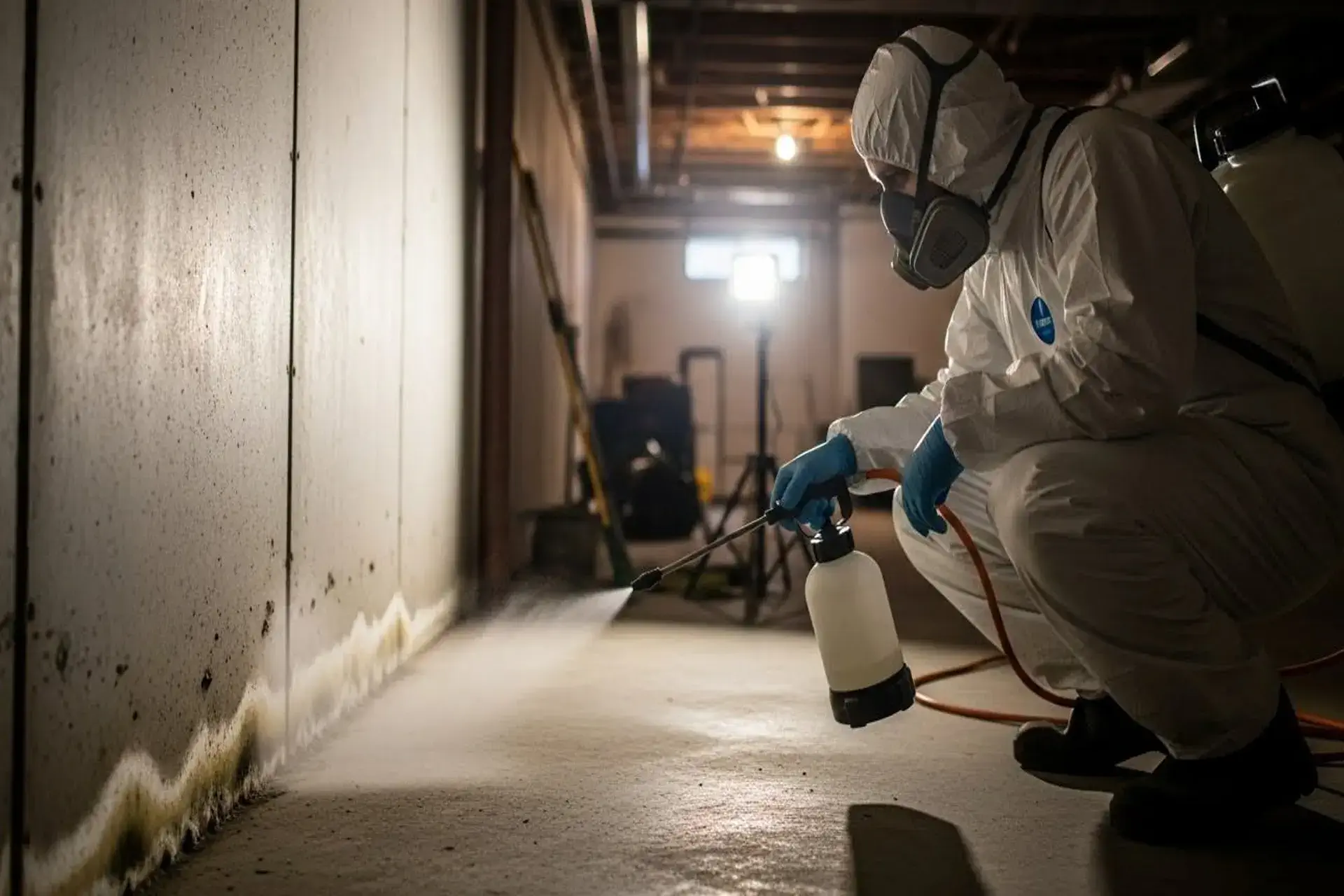
Mold is one of those problems that feels small at first… until you learn how fast it actually grows. Once moisture is present, mold can begin forming in as little as 24–48 hours, spreading silently across surfaces, behind your walls, inside insulation, under flooring, and even into the air you breathe. And it doesn’t matter where you live—mold grows in every climate and every kind of home when moisture, organic material, and time line up.
But if you live in Long Island or the coastal NYC area, the risks are even higher. Older basements, high groundwater levels, crawl spaces that trap humidity, nor’easters, and storm-related leaks all create the perfect environment for mold to take hold—and to come back again and again if moisture isn’t controlled.
That’s where most DIY attempts fail.
There’s too much conflicting advice online, too many “miracle products,” and way too many myths about mold color. The truth is simple: killing mold isn’t just about spraying a cleaner. It’s about eliminating the moisture that allows it to survive.
This guide shows you exactly how to do that.
You’ll learn how to kill mold on every surface, in every room, and in every situation—from bathrooms and basements to drywall, wood, carpets, HVAC systems, appliances, and more. It’s organized by room, surface, material, appliance, and severity so you can get straight to the steps you need.
If you’re already noticing spreading spots, musty odors, or recurring mold, it’s time to act before it becomes a much bigger problem.
Don’t Let Mold Damage Your Long Island Home! Contact Us For A Free Assessment Today.
First, Let’s Talk About Why Mold Is Growing in Your Home…
Mold isn’t random, and it isn’t a “dirty house” problem. Mold is a living microorganism. It’s a type of fungus that spreads by releasing tiny spores into the air. Those spores are everywhere: in every home, in every state, and in every season. The problem starts when spores land on a damp surface and finally get what they need to grow.
There are many species that show up in homes; Cladosporium, Penicillium, Aspergillus, and of course Stachybotrys, commonly called black mold. While they look different, they all operate the same way: They grow fast when moisture is present.
How fast?
In the right conditions, mold can start growing in as little as 24-48 hours after a leak, spill, or dampness settles in. If you live in a humid or coastal area like here in Long Island, the risks are even higher. Humid summers, older basements, rising groundwater, and crawl spaces that trap moisture all create ideal mold conditions. Even a small amount of moisture like condensation, seepage, or a slow drip can fuel a full mold colony behind your walls.
That’s why understanding why mold is growing is the first step toward stopping it for good. You need to stop the source of the moisture.
The Color Mold Myth
Let’s just say… we’ve seen the following questions circulating the internet:
- What kills white mold?
- Is pink mold dangerous?
- Does black mold mean toxic mold?
- Do different colors need different cleaners?
- Is yellow mold worse than green mold?
And as a leading mold remediation contractor in New York with 20+ years of experience in mold removal and mold prevention, we can tell you firsthand:
Color does not matter when it comes time to kill mold.
Here’s the truth most homeowners never hear:
The color of mold doesn’t change how you clean it, how dangerous it is, or what product you need.
Pink mold in your shower, white mold on your plants, green mold on wood, black mold behind drywall, every one of them relies on the same three factors: moisture, organic material, and time.
Whether it’s pink mold from your shower or white mold on your plants, the method is still moisture control + proper cleaning.
Color may hint at the species, but it does not change the fundamentals of killing mold or preventing it from coming back.
Now that we’ve cleared up the color myth, let’s discuss the personal protective equipment required to keep you and your family safe during DIY mold removal…
Personal Protective Equipment (PPE) for Safe Mold Removal
Most homeowners underestimate how quickly mold spreads into the air once disturbed, and how easily spores can enter your lungs, eyes, and skin. Proper PPE is essential anytime you attempt to clean small patches of mold. Without it, you risk inhaling spores, triggering allergies, or spreading contamination to other areas of the home. This section outlines exactly what gear you need, why it matters, and how to use it correctly.
Essential PPE You Should Wear Before Cleaning Mold
Wearing the right gear dramatically reduces your exposure risk, especially when learning how to kill mold safely.
- N95 or P100 Respirator: Prevents inhalation of mold spores and microfragments. Surgical masks are ineffective.
- Protective Gloves (Nitrile or Rubber): Keeps mold, chemicals, and cleaners from irritating your skin.
- Safety Goggles (Non-Ventilated): Protects eyes from spores and cleaning agents—essential when using peroxide or bleach.
- Long Sleeves & Disposable Coveralls: Prevents spores from settling on your clothing. Disposable suits are ideal for larger patches.
- Hair Cover or Hat: Keeps spores from settling in hair, where they can later spread around the home.
- Boot Covers or Dedicated Shoes: Prevents tracking mold into clean rooms.
Why PPE Matters During Mold Cleanup
- Spores become airborne as soon as surfaces are disturbed.
- Mold can irritate skin, eyes, and respiratory systems even in small amounts.
- Cleaning chemicals used to kill mold can splash or aerosolize.
- PPE helps prevent cross-contamination to other rooms.
- Protecting yourself is critical, especially if you have asthma, allergies, or respiratory sensitivity.
How To Use PPE Properly
- Seal Respirator Tightly: If air leaks around the mask edges, it’s not protecting you.
- Remove Gloves Carefully: Peel them off without touching the outside surface.
- Bag Disposable Gear Immediately: Prevents spores from re-entering the home.
- Wash Clothes in Hot Water: If you’re not using disposable coveralls, launder clothing immediately.
- Shower After Cleaning: Removes spores from skin and hair.
When PPE Isn’t Enough
Even with proper gear, there are situations where DIY cleanup becomes unsafe:
- Mold covers more than 10 square feet
- Mold is inside walls, HVAC systems, or insulation
- You experience symptoms after exposure
- Mold returns after previous cleanings
- The home has structural damage or water saturation
In these cases, a trained remediation team is necessary to protect both your health and your home.
Unsure If It’s Safe To Clean Mold Yourself? Contact Us For a Free Assessment Today.
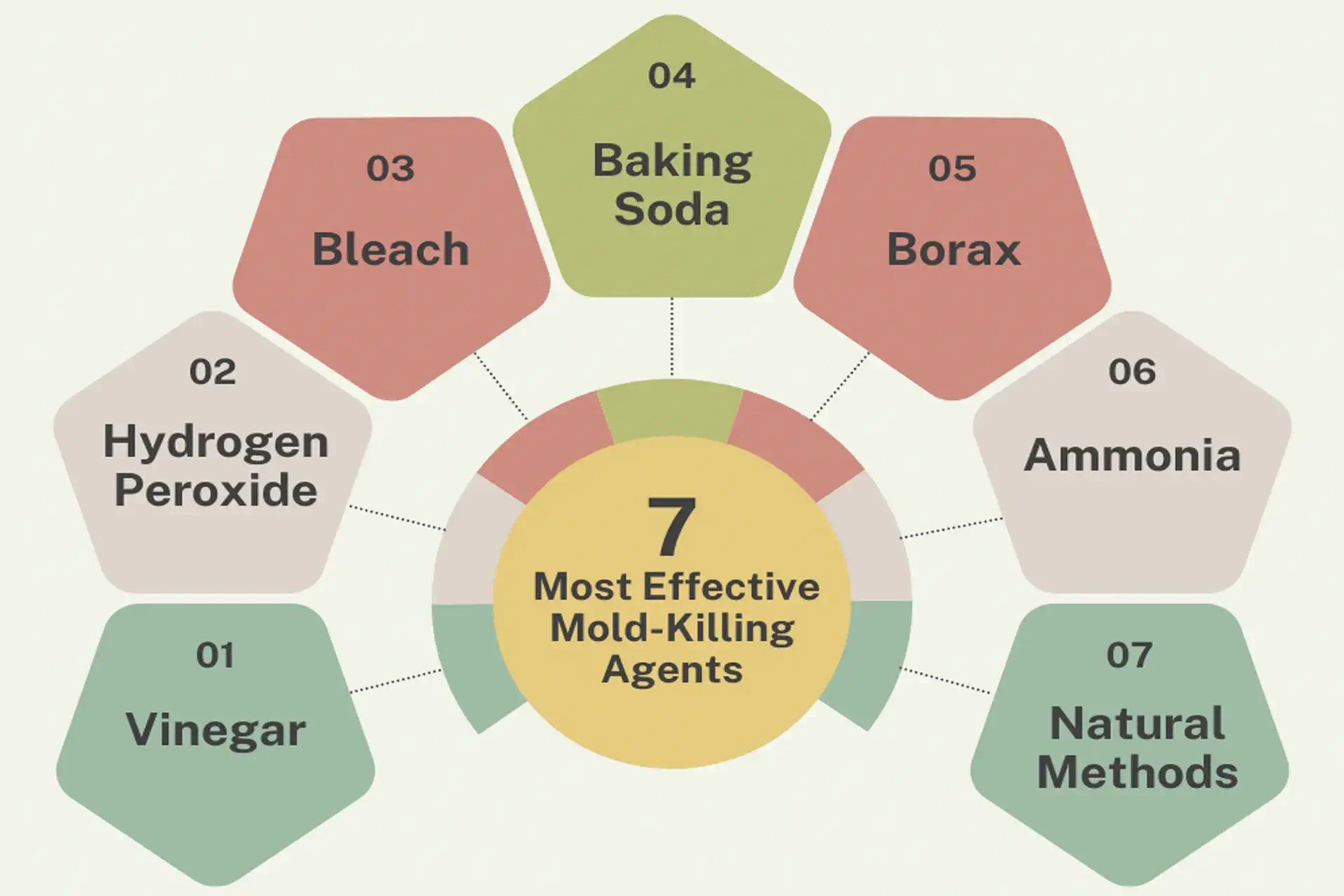
How to Get Rid of Mold: The 7 Most Effective Mold-Killing Agents
Not every mold-killing method works on every surface, and not every product is safe to use in every situation. These seven agents are the most reliable and widely used in real remediation work. For all methods, remember the basics: use gloves, eye protection, proper ventilation, and never mix chemicals unless the combination is confirmed safe.
And remember, it’s always better to let the pros handle it. If you live anywhere in Long Island, our mold removal experts kill the mold for good, stop it at the source, and guarantee it doesn’t return! Reach out to us any time for a free mold inspection!
Vinegar: How To Kill Mold With Vinegar
White distilled vinegar is one of the most effective natural mold killers because it penetrates porous materials extremely well. It also helps prevent mold from returning, making it a strong option for homeowners looking for a safer, chemical-free solution. Learning how to kill mold with vinegar is especially useful for drywall, grout, and finished wood where deeper penetration matters.
How To Use Vinegar To Kill Mold:
- Spray Full Strength: Apply undiluted vinegar directly to the mold.
- Let Sit 60 Minutes: Allow it to penetrate the material.
- Scrub Thoroughly: Use a brush or sponge to lift growth.
- Wipe Lightly: Do not rinse completely; a slight residue helps prevent regrowth.
Best On: Drywall surface mold, tile, grout, finished wood
Avoid On: Natural stone, waxed wood, certain metals
Hydrogen Peroxide: How To Kill Mold With Hydrogen Peroxide
Hydrogen peroxide (3%) is an effective mold killer because it disinfects and lifts stains at the same time. It breaks down mold through oxidation, making it ideal for bathrooms and sealed surfaces. Learning how to kill mold with hydrogen peroxide helps homeowners remove growth without the harsh smell of bleach.
How To Use Hydrogen Peroxide:
- Spray Directly: Saturate the moldy area with 3% peroxide.
- Wait 10-15 Minutes: Allow bubbling action to break down growth.
- Scrub And Wipe: Remove loosened mold and residue.
Best On: Tubs, bathroom surfaces, sealed concrete, appliances
Avoid On: Delicate fabrics, unfinished wood
Bleach: How To Kill Mold With Bleach
Bleach is powerful but only effective on non-porous surfaces because it cannot travel deeply into materials like drywall or wood. It disinfects surface mold and removes stains, which is why many homeowners still turn to it. Understanding how to kill mold with bleach safely is critical because misuse can damage materials or create dangerous fumes.
How To Use Bleach Safely:
- Mix Proper Ratio: 1 cup bleach per 1 gallon of water.
- Apply Generously: Use on tile, sinks, tubs, or glass.
- Let Sit 10 Minutes: Allow time for disinfection.
- Rinse Thoroughly: Remove chemical residue.
Best On: Non-porous surfaces only
Avoid On: Wood, drywall, fabrics, grout, metal, and never mix with ammonia.
Baking Soda: How To Kill Mold With Baking Soda
Baking soda is a mild, non-toxic cleaner that works well for light mold and odor issues. It is safe for kids, pets, and sensitive surfaces, making it a good choice for day-to-day mold cleaning. Homeowners often learn how to kill mold with baking soda when dealing with refrigerators, fabrics, or painted walls.
How To Use Baking Soda:
- Spray Solution: Mix 1 teaspoon baking soda with 2 cups of water.
- Scrub The Area: Remove mold from the surface.
- Rinse And Repeat: Rinse and reapply if needed.
- Use Paste For Tough Spots: Leave a paste on the surface for 30 minutes.
Best On: Fabrics, painted walls, refrigerators
Avoid On: Deep mold colonies or structural mold
Borax: How To Kill Mold With Borax
Borax is a powerful cleaning agent that kills mold and helps prevent regrowth by altering the surface pH. It does not produce harsh fumes, making it safer for indoor use compared to bleach or ammonia. Learning how to kill mold with borax is especially helpful for homeowners dealing with basement walls and wood framing.
How To Use Borax:
- Mix Strong Solution: 1 cup borax per 1 gallon warm water.
- Scrub Deeply: Work solution into the material.
- Do Not Fully Rinse: Leave a light residue to prevent regrowth.
Best On: Wood, tile, grout, basement walls
Avoid On: Fabrics, stone countertops
Ammonia: How To Kill Mold With Ammonia
Ammonia is effective for killing mold on non-porous surfaces but unsuitable for porous materials where mold grows deep. It evaporates quickly and can disinfect hard surfaces, but must be handled cautiously. Understanding how to kill mold with ammonia safely is crucial because improper use can produce toxic fumes.
How To Use Ammonia Correctly:
- Use Clear Ammonia: Avoid sudsy varieties.
- Mix 50/50 With Water: Apply to hard surfaces.
- Scrub And Rinse: Remove residue completely.
Best On: Glass, tile, metal
Avoid On: Drywall, wood, fabrics, stone, and NEVER mix with bleach
Natural Methods: How To Kill Mold Without Bleach
Natural methods are ideal for homeowners who want effective mold removal without harsh chemicals. These options work well for light mold on household surfaces and are safer for kids, pets, and sensitive environments. Learning how to kill mold without bleach gives you safe alternatives that still get results.
How To Use Natural Cleaners:
- Tea Tree Oil Mix: 1 teaspoon tea tree oil per 1 cup water; spray and do not rinse.
- Hydrogen Peroxide Option: 3% peroxide for stain lifting.
- Vinegar For Penetration: Excellent for drywall and grout.
- Baking Soda For Odors: Helps neutralize musty smells.
Best On: Kids’ rooms, wood, drywall surface mold, light infestations
Avoid On: Large infestations, post-flood mold, structural mold
Works On vs. Never Use On: Quick Reference Chart
| Agent | Works On | Never Use On |
|---|---|---|
| Vinegar | Tile, grout, drywall surface, finished wood | Natural stone, waxed wood, some metals |
| Hydrogen Peroxide | Bathroom surfaces, sealed concrete, appliances | Delicate fabrics, unfinished wood |
| Bleach | Ceramic tile, tubs, sinks, glass | Wood, drywall, fabrics, grout, metals |
| Baking Soda | Fabrics, painted walls, upholstery | Deep mold colonies, structural mold |
| Borax | Wood, tile, grout, basement walls | Fabrics, stone countertops |
| Ammonia | Glass, tile, metal | Porous materials, stone; NEVER mix with bleach |
| Natural Methods | Wood, drywall surface, kids’ areas | Large infestations or post-flood mold |
How To Kill Mold After Water Damage From a Leak, Flood, or Other Event
Water damage creates perfect conditions for rapid mold growth. Once any surface stays damp for 24-48 hours, spores begin colonizing behind walls, under flooring, inside insulation, and throughout porous materials. Killing mold after water damage requires fast action, correct drying methods, and removing materials that cannot be salvaged.
Step-By-Step Emergency Actions
- Stop the Water Source: Shut off leaking pipes, repair roof penetrations, or control groundwater entry.
- Extract Standing Water: Use wet vacs, mops, pumps, or towels. The faster water is removed, the less mold can spread.
- Increase Airflow Immediately: Use fans and open windows (if humidity outside is low).
- Deploy Dehumidifiers: Lower indoor humidity below 50% as quickly as possible.
- Document Damage: Take photos before removing materials—insurance often requires proof.
- Isolate the Area: Close doors and avoid tracking spores to clean rooms.
Using Moisture Meters
Moisture meters are essential after water damage. Materials may appear dry but still hold enough moisture for mold to grow.
- Safe Moisture Levels: Typically below 16% (varies by material).
- High Readings: Require extended drying or removal of wet materials.
A meter prevents guessing and stops homeowners from sealing mold inside walls.
Removal of Saturated Materials
Some materials cannot be cleaned once saturated and must be removed to stop mold at its source:
- Water-damaged drywall
- Carpet and padding
- Insulation holding moisture
- Warped or weakened wood and OSB
- Baseboards, trim, cabinets, or vanities that absorbed water
Leaving these materials in place guarantees mold will return, even after cleaning.
Warning Signs DIY Is Unsafe
Stop immediately and call a professional if:
- Mold has grown for more than 24-48 hours
- Mold returns after multiple cleanings
- You smell mold but cannot see it (likely hidden in walls)
- Water came from sewage or contaminated sources
- The affected area is larger than 10 sq. ft.
- HVAC systems may be involved
- Flood water reached insulation or wall cavities
- You feel symptoms during cleanup (coughing, headaches, irritation)
If Water Damage Occurred 24+ Hours Ago, Contact Us For a Free Assessment Today.
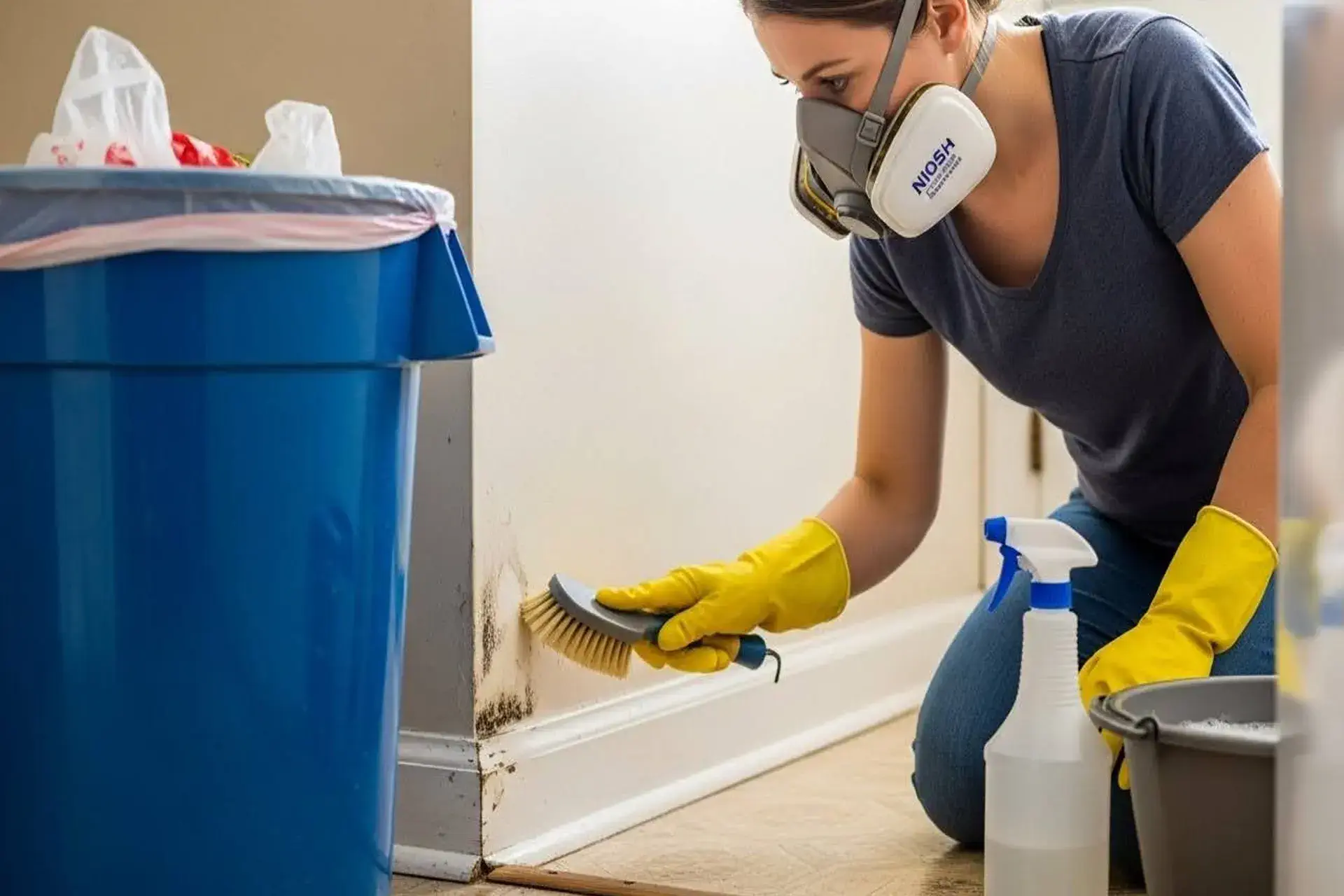
Killing Mold on Every Surface & Material
Mold behaves differently depending on the surface it lands on. Porous materials absorb moisture and spores deeply, while non-porous surfaces allow for easier cleaning but may still hide mold in seams or crevices. This section shows you exactly how to kill mold on every major surface inside a home, walls, wood, carpets, plastics, metals, concrete, HVAC systems, appliances, and air.
How To Kill Mold on Walls, Drywall & Ceilings
Mold on walls and ceilings is extremely common because drywall, joint compound, and paint absorb moisture quickly. Once mold settles into porous materials, surface cleaning is often not enough.
How To Kill Mold on Painted Walls
- Spray peroxide or vinegar directly on the surface.
- Let sit for 10-15 minutes.
- Scrub gently with a soft brush or microfiber towel.
- Dry completely with airflow or a fan.
How To Kill Mold on Drywall
Drywall is porous. If mold has penetrated deeply, cleaning may not work.
- Use peroxide or a non-bleach antimicrobial cleaner.
- Light surface mold may be removed, but soft, bubbled, or crumbly drywall must be cut out.
- Always dry the area thoroughly to prevent regrowth.
How To Kill Mold on Drywall Ceilings
- Apply peroxide with a sprayer or sponge (bleach may drip and damage finishes).
- Let sit for 10 minutes.
- Scrub lightly to avoid texture damage.
- Address ventilation issues, ceiling mold signals trapped humidity.
How To Kill Mold Behind Walls
If you smell mold but don’t see it:
- Use moisture meters to identify wet areas.
- Remove small test sections of drywall.
- Look for mold on insulation, studs, and backside of drywall.
- Hidden mold almost always requires professional remediation.
When Mold in Walls Requires Opening the Wall
You must open the wall if:
- Mold returns repeatedly after cleaning
- The drywall feels soft or swollen
- There has been a leak or water event
- You smell mold coming from outlets or baseboards
- Insulation is damp or sagging
When To Call a Professional
- Mold covers more than 10 sq. ft.
- Mold is growing inside wall cavities
- You find black streaks on studs or insulation
- You feel sick when in the affected room
How To Kill Mold on Wood (Raw, Finished, Furniture, Joists & Rafters)
Wood is a top breeding ground for mold because it holds moisture and organic particles. How you clean wood depends on whether it’s finished, unfinished, or structural.
How To Kill Mold on Finished Wood
- Spray vinegar or peroxide lightly.
- Wipe and scrub with a gentle brush or cloth.
- Avoid excessive moisture, which can damage the finish.
How To Kill Mold on Raw or Unfinished Wood
- Use a borax solution (1 cup per gallon of warm water).
- Scrub deeply so the solution penetrates fibers.
- Do not rinse fully, leave a residue to prevent regrowth.
- Increase airflow for full drying.
How To Kill Mold Deep in Wood
When mold penetrates deeply:
- Sand the surface to expose clean wood.
- Apply borax or a mold-control treatment.
- Dry wood to below 16% moisture content.
What Kills Mold Permanently on Wood?
- Borax
- Professional antimicrobial treatments
- Sanding + sealing (for severe infestations)
- Removing structurally compromised lumber
Subfloors, OSB & 2×4s
Subfloors and structural framing require stronger methods:
- HEPA vacuum loose spores.
- Apply borax or peroxide.
- Sand affected areas.
- Replace boards that are soft, dar
How To Kill Mold in Carpets, Rugs & Fabrics
Carpet fibers hold moisture, dust, and spores, making mold difficult to remove.
How To Kill Mold in Carpet
- Use a mixture of vinegar + baking soda solution.
- Scrub and blot repeatedly.
- Use a wet vacuum to extract moisture.
- Dry with fans or a dehumidifier.
How To Kill Mold on Rugs & Outdoor Rugs
- Hose down outdoors.
- Use peroxide or vinegar to saturate fibers.
- Scrub thoroughly.
- Dry in sunlight to inhibit regrowth.
How To Kill Mold Off Clothes
- Wash with hot water.
- Add 1 cup vinegar or borax to the cycle.
- Sun-dry if possible.
When Carpet Must Be Removed
Remove carpet if:
- Moldy smell remains after cleaning
- Padding is soaked
- Mold covers an area larger than 2-3 ft
- Water damage lasted longer than 24-48 hours
Carpet acts like a sponge, once saturated, it cannot be salvaged.
How To Kill Mold on Plastic, Rubber & Silicone
These non-porous materials are easier to clean, but mold can hide in seams and grooves.
Best Methods
- Spray peroxide or vinegar.
- Let sit for 10 minutes.
- Scrub with a soft brush.
- Rinse and dry fully.
Water Bottles (Hydroflask, HydroJug, Yeti)
- Use peroxide or boiling water.
- Clean caps, straws, seals, and threads.
- Air dry completely, moisture trapped in rubber seals grows mold fast.
How To Kill Mold on Metal (Stainless Steel, Tools, Appliances)
Mold does not penetrate metal surfaces, but spores cling to oils, dust, or biofilm.
How To Clean Mold From Metal
- Spray peroxide or vinegar.
- Wipe clean with microfiber.
- Use baking soda for stubborn stains.
- Dry thoroughly to prevent condensation-driven regrowth.
How To Kill Mold on Concrete, Brick & Hard Surfaces
Concrete is semi-porous and often stays damp due to wicking and humidity, especially in Long Island basements.
How To Kill Mold on Concrete & Brick
- Scrub with borax or peroxide.
- Do not use bleach long-term. It evaporates too fast and leaves moisture behind.
- Use a stiff brush for textured surfaces.
- Dry walls with dehumidifiers.
Long Island Note
Basement walls on Long Island often wick groundwater through micro-cracks. If concrete feels cold or damp, mold will return without addressing moisture sources.
How To Kill Mold in HVAC Systems
HVAC mold spreads spores throughout the home, worsening air quality.
What To Clean
- Replace filters
- Clean coils with approved coil cleaners
- Empty and clean drip pans
- Treat vents with peroxide-based cleaners
AC Coils, Drip Pans & Vents
Dust + moisture = ideal mold habitat. Keep drains clear and coils dry.
Why HVAC Mold Spreads Faster
- Airflow distributes spores into every room
- Moisture from condensation accelerates growth\
- Warm ducts support mold colonies
Professional HVAC cleaning is often required for deep contamination.
How To Kill Mold in Appliances
Washing Machines
- Clean rubber gasket with peroxide or vinegar
- Run a hot cycle with vinegar or washing machine cleaner
- Leave door open between loads
Dishwashers
- Clean filter
- Scrub seals and spray arms
- Run empty with vinegar
Ice Makers
- Clean reservoir with peroxide
- Replace old filters
- Sanitize internal lines if mold smell persists
How To Kill Mold Spores in the Air
Airborne mold spores are invisible but constantly circulating.
What Actually Works
- HEPA air purifiers (capture spores)
- Dehumidifiers (remove moisture mold needs)
- Increased airflow (reduces stagnant pockets)
- Cleaning soft surfaces that trap spores
- Fixing moisture sources to stop new airborne mold
Air purifiers do not kill mold, but they significantly reduce airborne spores.
How To Prevent Mold
Mold prevention starts long before you ever spot growth on a wall, ceiling, or bathroom surface. Mold spores exist everywhere, but they only colonize when moisture, still air, and the right materials overlap. That means the real secret to preventing mold has far less to do with cleaning products and far more to do with moisture control and home maintenance.
When homeowners understand how humidity, leaks, condensation, and poor airflow work together, mold becomes far easier to prevent. Below are the essential, science-backed steps every homeowner should follow to keep mold from coming back, especially in moisture-prone regions like Long Island.
Permanent Mold Prevention Methods
To keep mold away for good, your home must stay dry, balanced, and well-ventilated. Cleaning alone won’t stop mold if moisture remains.
- Maintain 30-50% Indoor Humidity: Use dehumidifiers in basements, laundry rooms, and crawl spaces.
- Repair Leaks Immediately: Even slow drips create moisture pockets where mold begins in 24-48 hours.
- Improve Ventilation: Use bathroom exhaust fans, kitchen hoods, and airflow pathways to help surfaces dry.
- Reduce Clutter in Damp Rooms: Items stored tightly against walls trap humidity and promote hidden mold.
- Seal Basement Walls: Prevent moisture from wicking through concrete and feeding mold colonies.
- Encapsulate Crawl Spaces: Creates a dry, controlled environment that blocks humidity and soil moisture.
- Use Vapor Barriers in Wet Areas: Prevents condensation from getting into drywall and insulation.
- Install French Drains or Sump Pumps Where Needed: Controls groundwater, hydrostatic pressure, and basement moisture.
Long Island-Specific Mold Prevention Tips
Long Island’s climate and soil conditions make mold prevention more challenging than in many other regions.
- Coastal Humidity Requires Stronger Humidity Control: Homes near water experience persistent moisture.
- Basements Need Vapor Sealing + Dehumidification: Concrete walls wick groundwater from saturated soil.
- Crawl Spaces Benefit From Encapsulation: Exposed soil and cool air create perfect mold conditions.
- Storm Surges and Nor’easters Introduce Hidden Moisture: Water intrusion can stay trapped behind walls for months.
- Hydrostatic Pressure Around Foundations Requires Drainage: Exterior waterproofing and French drains reduce long-term mold risk.
Key Insight: Moisture management (not cleaning agents) is what prevents mold permanently.
Why Professional Mold Remediation Is Always Best
While some light, surface-level mold can be handled with safe DIY methods, professional remediation is almost always the best choice (and often the only safe choice) for anything beyond small, isolated areas. Mold behaves differently than typical household messes: it spreads microscopically, thrives inside walls, and releases spores long before it becomes visible. That means even a small patch of mold usually indicates a much larger moisture problem behind the scenes.
Certified professionals follow strict remediation protocols that eliminate both the mold you see and the moisture conditions causing the growth you don’t see. They use negative air pressure, HEPA filtration, antimicrobial treatments, and moisture diagnostics to stop mold at its source. Most importantly, professionals prevent cross-contamination, ensuring mold isn’t accidentally spread throughout your home during cleaning. For Long Island, Brooklyn, Queens, and other coastal regions where groundwater, humidity, and aging basements create ideal mold conditions, DIY work can easily miss critical moisture pathways.
Professional remediation ensures your home is not only cleaned but restored to safe, dry conditions that prevent mold from returning.
Our Mold-Related Remediation and Prevention Solutions
As a leading mold remediation and moisture-control contractor in New York with 20+ years of experience, we offer full-service solutions designed to eliminate current mold growth and prevent future problems. Our approach is evidence-based, moisture-focused, and tailored to the unique climate conditions of Long Island and NYC.
Professional Mold Inspection & Testing
- Identifies hidden mold behind walls, floors, and insulation
- Determines mold species, severity, and spread
- Measures airborne spore levels and moisture intrusions
- Provides a clear remediation plan
Certified Mold Remediation
- HEPA vacuuming, containment barriers & negative air pressure
- Removal of contaminated drywall, insulation, and porous materials
- Thorough antimicrobial treatment for all affected surfaces
- Post-remediation verification for safety
Basement & Crawl Space Waterproofing
- Interior French drains
- Sump pump installation
- Crawl space encapsulation
- Vapor barriers & moisture sealing
- Basement wall sealing and humidity control
Moisture Diagnostics & Prevention
- Moisture meter assessments
- Leak detection
- Foundation seepage evaluation
- Airflow improvements & ventilation plans
Long-Term Mold Prevention Solutions
- Dehumidification systems (whole-home or room-based)
- Crawl space encapsulation & insulation
- Exterior drainage corrections
- French drain systems for groundwater
- Vapor sealing for basements and slabs
Every home has different moisture challenges, but our goal is always the same: remove the mold, fix the moisture, and protect your home so the problem never returns.
How To Get Rid of Mold Safely: Final Thoughts
Killing mold is possible for many homeowners, especially with the seven proven mold-killing methods we covered: vinegar, hydrogen peroxide, bleach (for non-porous surfaces), baking soda, borax, ammonia, and natural/no-bleach alternatives.
You also learned how to kill mold in bathrooms, basements, crawl spaces, attics, HVAC systems, appliances, and on materials ranging from drywall to concrete. But the real takeaway is this: mold returns the moment moisture comes back.
Cleaning is temporary. Moisture control is permanent.
If your home has recurring mold, musty odors, or hidden moisture issues, that’s no longer a DIY situation. Get ahead of the problem before it spreads into walls, framing, insulation, or HVAC ducts.
Don’t Let Mold Spread Inside Your Walls: Schedule Your Free Mold Assessment Today!
Frequently Asked Questions About Killing & Preventing Mold
What kills mold permanently?
Long-term prevention relies on moisture control: dehumidifiers, fixing leaks, ventilation, and sealing damp areas.
Can I kill mold with vinegar?
Yes. Vinegar penetrates porous surfaces and kills up to 82% of mold species.
Does bleach kill mold on drywall?
No. Bleach only works on non-porous surfaces like tile or glass. Drywall absorbs moisture, so bleach can’t reach the roots.
How do I kill mold after a flood or water leak?
Dry immediately, remove saturated materials, and disinfect with peroxide or borax. If 24+ hours have passed, call a professional.
What kills airborne mold spores?
HEPA filtration, dehumidification, ventilation, and eliminating moisture sources.
Can I kill mold in a basement myself?
Light surface mold can be cleaned, but recurring or widespread basement mold requires professional help.
How do I kill mold in a crawl space?
Use antimicrobial cleaners + dehumidification. Crawl space mold often requires encapsulation to prevent return.
What is the safest mold cleaner for homes with kids and pets?
Vinegar, hydrogen peroxide, or baking soda are safe, non-toxic options.
How do I prevent mold in bathrooms long-term?
Use ventilation, squeegee shower walls, clean grout regularly, and run exhaust fans for 20 minutes after showers.
When should I call a mold professional?
If mold covers more than 10 sq. ft., returns after cleaning, has a musty odor with no visible growth, or follows flooding.